
Study Tips & Resources
Memorization is a skill, not a talent. These are the habits that separate students who remember polyatomic ions in May from students who forgot them by October.
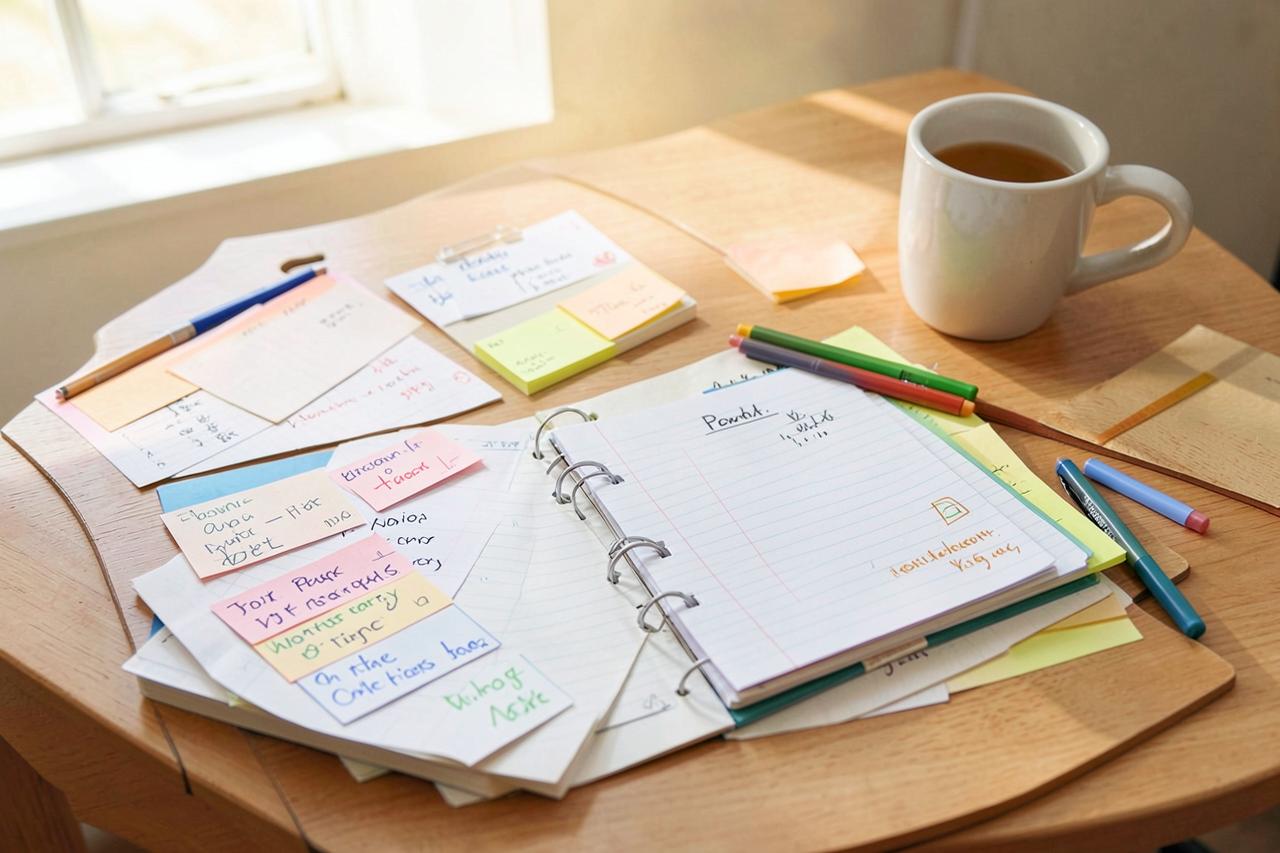
Six Habits That Actually Work
Space it out
Ten minutes a night for six nights beats one hour the night before. Your brain files things away during sleep, so give it several nights to work with.
Test, don't re-read
Re-reading feels productive and isn't. Cover the answer, say it out loud, then check. Getting it wrong and correcting yourself is where the learning happens.
Shuffle the deck
If you always study polyatomic ions in the same order, you memorize the order, not the ions. Shuffle every round.
Teach it to somebody
Explain solubility rules to a sibling, a friend, or your dog. If you get stuck mid-sentence, that's the exact spot you need to review.
Write it by hand
Making your own flash cards is half the studying. Handwriting forces you to slow down and process each fact.
Track your misses
Keep a running 'trouble list' of the facts you blow every time. On test morning, review only that list.
Build a Physical Flash Card Deck
- Use index cards, one fact per card. Formula on the front, name on the back.
- Color-code by topic — blue for ions, yellow for prefixes, green for solubility.
- Run the “three pile” method: got it, almost, no idea. Only the last two piles go back in the rotation.
- Rubber-band the deck to your binder so it comes with you everywhere.
- Re-shuffle before every session, and quiz backwards once a week.

Al says…
Keep your trouble list on your phone's lock screen the week of a test. You'll glance at it fifty times a day without even trying.